
Frontiers of Automation for Regulation
By Jude Canady

The Real Problem with Audits and Compliance
Audit and regulatory work keeps getting heavier, not because teams are careless, but because the volume of requirements keeps growing. Every new standard adds language, nuance, and interpretation. Documentation grows alongside it. Over time, policies and procedures become harder to navigate, even for the people who wrote them. When an audit approaches, teams are forced to relearn their own material under pressure. Most compliance teams know what auditors are asking for. The real challenge is proving alignment in a way that is complete, consistent, and defensible. That proof usually lives across many documents, written at different times, by different people, for different purposes. Connecting those dots manually is slow and error-prone. Due to this, compliance work often becomes reactive. Reviews happen late. Gaps are discovered when deadlines are near. Fixes are rushed. Teams do their best, but the process itself works against them. This is why audits feel stressful even when organizations are doing many things right.
Why Traditional Compliance Processes Break Down
Most compliance and audit preparation still depends on manual document review. Someone reads a requirement. Someone else searches for relevant text. Evidence is copied into spreadsheets or tracking tools. Decisions are made in isolation and recorded informally. The same requirement may be interpreted differently from one review to the next. This approach does not scale. As requirements increase, so does review time. Because the work is tedious, it is often postponed. Documentation reviews are pushed until an audit or regulatory deadline forces action. When gaps surface late, teams have limited options. This leads to repeated findings, even in organizations that are actively investing in compliance. This is also where most compliance effort is consumed. Large amounts of time go into reading, mapping, and cross-referencing documents rather than assessing risk or improving controls. The process rewards endurance more than insight. Over time, this creates burnout and inconsistency across audit cycles.
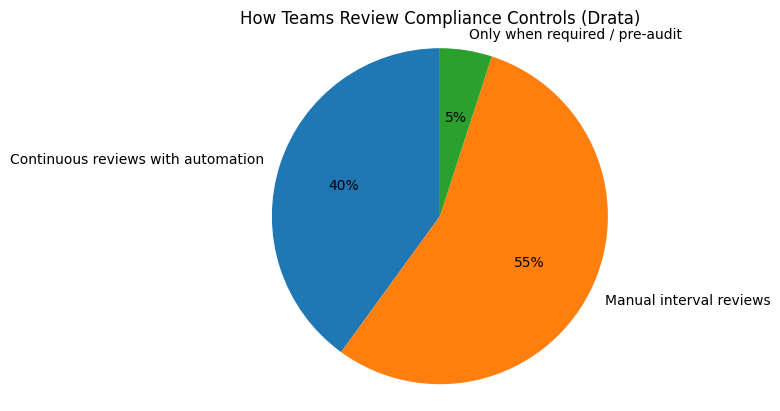
Manual review remains the default approach for most compliance teams, leaving little time for proactive or continuous alignment. [Drata, Compliance Statistics and Trends (2025)]
Riftur as Remedy
Riftur focuses on the part of compliance work that consumes the most time: document alignment. Instead of asking people to manually compare requirements to evidence, Riftur automates that comparison. Teams provide their documentation on one side and audit or regulatory criteria on the other. The tool analyzes how well the two align. The analysis is based on meaning rather than keywords. Riftur identifies where requirements are fully addressed, partially addressed, or missing. The output is structured and consistent, which removes much of the ambiguity that exists in manual reviews. Teams no longer have to rely on memory or interpretation alone to understand their compliance posture. This does not replace human judgment. It removes repetition. Review work becomes faster and easier to repeat. Instead of spending time searching for evidence, teams can focus on deciding what to fix and how to improve documentation. That shift changes the entire tone of compliance work.
Sustainable Compliance Models
Automation works best when it becomes part of a regular workflow. Alignment checks should happen early and often. Documentation should be treated as a living asset, not something reviewed once per year. Results should guide expert judgment, not replace it. Over time, this approach improves documentation quality. Reviews become repeatable. Audit preparation becomes predictable. Teams spend less time firefighting and more time improving real gaps. Compliance becomes easier to maintain and less disruptive to the organization. The goal is not to eliminate audits or regulatory scrutiny. It is to make them manageable. By automating document alignment, teams regain control over a process that often feels overwhelming. Audits become confirmations rather than investigations, and compliance becomes a maintained state rather than a recurring crisis.
If you have questions, feedback, or want to learn more about how Riftur is used, contact us. You can also visit our home page at riftur.com to start testing the platform for your use case. Read other posts on our blog for related topics and updates on Riftur.
© 2025 Riftur — All Rights Reserved